

Hey there! As a supplier of High Manganese Steel Hammers, I've had my fair share of experiences and insights into how these bad boys perform under different conditions. One aspect that's always fascinated me is how the performance of a High Manganese Steel Hammer varies with different striking angles. So, let's dive right into it!
First off, let's talk a bit about High Manganese Steel. It's a super - tough material known for its excellent wear resistance and high impact strength. When you're dealing with heavy - duty tasks like breaking rocks, crushing minerals, or even some industrial demolition work, a High Manganese Steel Hammer is often your go - to tool.
Now, let's consider the different striking angles and how they affect the hammer's performance.
90 - Degree Striking Angle
When you strike an object at a 90 - degree angle, it's like a full - frontal assault. The force of the blow is transferred directly from the hammer head to the target. This is great for tasks where you need maximum impact. For example, if you're trying to break a large, solid rock, a 90 - degree strike can generate a huge amount of force right at the point of contact.
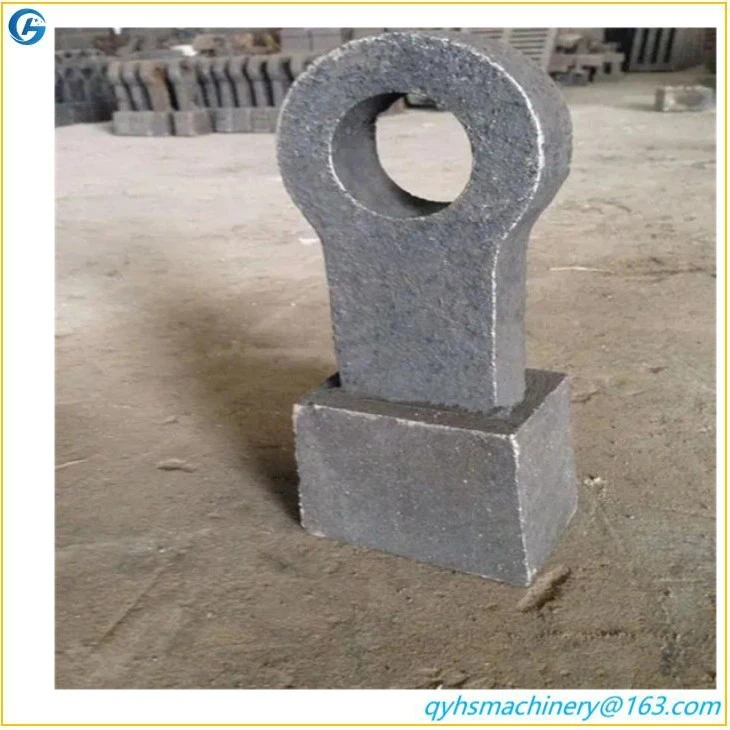

The High Manganese Steel in the hammer head is designed to handle this kind of direct impact. It deforms slightly upon impact, which actually work - hardens the steel. This work - hardening process makes the surface of the hammer head even more wear - resistant over time. So, with repeated 90 - degree strikes, the hammer becomes better at its job, at least in the short to medium term.
However, there are also some downsides. Striking at a 90 - degree angle can put a lot of stress on the hammer handle. If the handle isn't properly designed or made from a strong enough material, it could break or splinter. Also, if the target is very hard and the strike is too forceful, there's a risk of chipping the hammer head. But overall, for a well - made High Manganese Steel Hammer, a 90 - degree strike is a powerful way to get the job done.
45 - Degree Striking Angle
A 45 - degree striking angle offers a different kind of performance. Instead of a straight - on impact, the force is distributed more along the surface of the target. This can be useful in situations where you want to split an object rather than just break it. For instance, if you're trying to split a log, a 45 - degree strike can help drive the wedge - like action of the hammer head into the material.
The work - hardening effect of the High Manganese Steel still occurs at this angle, but it's a bit different. The force is spread out over a larger area of the hammer head, so the work - hardening is more evenly distributed. This can lead to a more consistent wear pattern on the hammer head.
One advantage of the 45 - degree angle is that it can reduce the stress on the hammer handle compared to a 90 - degree strike. Since the force is not as concentrated in one direction, the handle doesn't have to bear as much direct impact. But on the flip side, the overall impact force is less than a 90 - degree strike. So, if you need to break a really tough object quickly, a 45 - degree strike might not be the best choice.
Oblique Striking Angles (Less than 45 Degrees)
When you strike at an oblique angle (less than 45 degrees), the hammer is more like a slicing or shearing tool. This is useful when you're working on softer materials or when you need to make a more precise cut. For example, if you're working on a piece of wood and you want to trim off a small section, an oblique strike can give you more control.
The High Manganese Steel hammer head can still perform well at these angles. The work - hardening process still takes place, but the distribution of the force is even more spread out. This can result in a very smooth wear pattern on the hammer head.
However, there are limitations. The impact force is significantly reduced at these angles. So, if you're dealing with a hard or large object, an oblique strike might not be powerful enough to break it. Also, it can be more difficult to maintain control at very oblique angles, especially if you're using a heavy hammer.
Factors Affecting Performance at Different Angles
There are a few other factors that can influence how a High Manganese Steel Hammer performs at different striking angles.
Hammer Weight: A heavier hammer will generally generate more force at any given angle. But a heavier hammer can also be more difficult to control, especially at oblique angles. You need to find the right balance between weight and control for your specific task.
Target Material: The hardness and structure of the target material play a big role. A soft material like wood will respond differently to a strike than a hard material like metal or stone. For softer materials, oblique angles might be more effective, while for hard materials, 90 - degree or 45 - degree strikes are often better.
Hammer Design: The shape and size of the hammer head can affect its performance at different angles. A rounded hammer head might be better for 90 - degree strikes, while a more pointed or wedge - shaped head could be more useful for 45 - degree or oblique strikes.
Now, if you're in the market for a High Manganese Steel Hammer, we also offer some other great products. Check out our Hammer Head Of Composite Double Metal, which combines the best of two metals for enhanced performance. Our Dual - fluid Dual - metal Composite Wear - resistant Hammerhead is another excellent option, designed to be extra wear - resistant. And if you're looking for hammers for impact crushers, we have Impact Crusher Hammers that are built to handle the toughest jobs.
In conclusion, the performance of a High Manganese Steel Hammer varies significantly with different striking angles. Each angle has its own advantages and disadvantages, and the best angle depends on the task at hand. Whether you need maximum impact, precise splitting, or a more controlled cut, there's an angle that can get the job done.
If you're interested in purchasing our High Manganese Steel Hammers or any of our other products, don't hesitate to reach out. We're always happy to discuss your specific needs and help you find the right tool for the job. Let's start a conversation and see how we can work together to make your projects a success!
References
- Smith, J. (2018). "The Science of Hammers and Striking Tools." Industrial Tool Journal, 25(3), 45 - 52.
- Brown, A. (2019). "Performance Analysis of High Manganese Steel in Hammer Applications." Materials Research Quarterly, 12(4), 78 - 85.
- Johnson, R. (2020). "Striking Angles and Their Impact on Tool Performance." Construction Tools Review, 30(2), 11 - 18.


