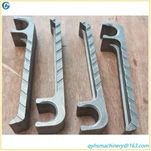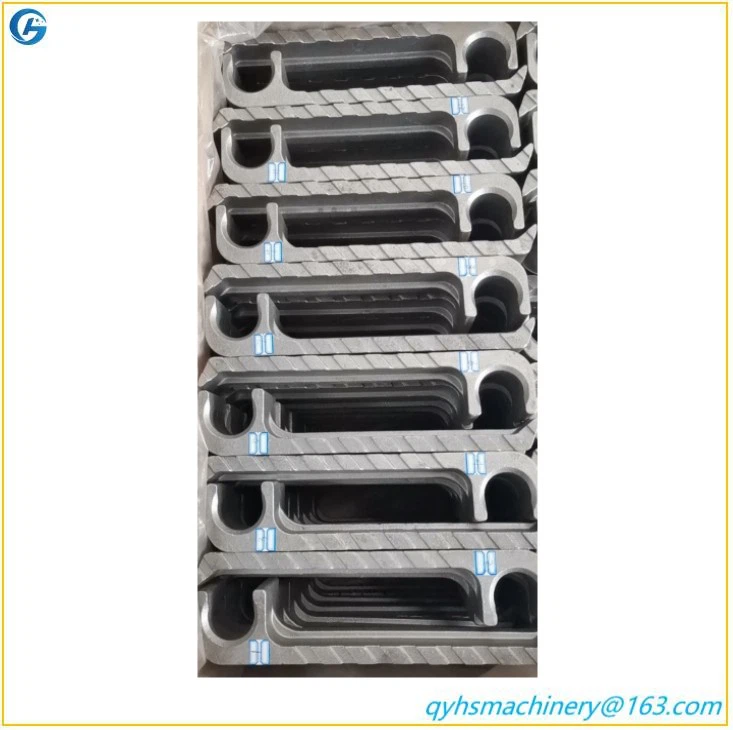
The grate bars used to improve sintering air permeability have a prism structure. The upper part of the prism is a trapezoid, the middle part is a rectangle, and the lower part is a triangle. The long sides of the rectangle coincide with the lower bottom of the trapezoid and the bottom of the triangle respectively. The overall height of the prism cross section is It is equal to the long side of the rectangle; the trapezoidal surface of the grate bar is in contact with the material, and the triangular surface is in contact with the heat insulation sleeve. The lower part of the grate bar in contact with the heat insulation sleeve has a triangular structure, which reduces the contact area between the grate bar and the heat insulation sleeve, reduces heat conduction, and plays a role in protecting the equipment. The height of the trapezoid of the prism cross section is equal to the height of the triangle. It is more conducive to the air permeability of the sintered material layer.
The height of the trapezoid of the prism cross section is equal to the height of the triangle. The length of the grate bar is 485mm. The upper bottom of the upper trapezoid is 26mm, the lower bottom is 30mm, and the height is 2mm. The rectangular size in the middle of the grate bar is 26mm×30mm; the furnace The lower base of the triangle at the bottom of the grate is 30mm and the height is 2mm.
The grate bar improves the air permeability of the sintered material layer, improves the distribution of air flow at the bottom, and reduces the erosion of the heat insulation sleeve at the bottom of the trolley and the grate bar itself due to excess heat at the bottom of the thick sintered material layer. It not only improves the sintering technical indicators , and can also reduce grate bar losses.